
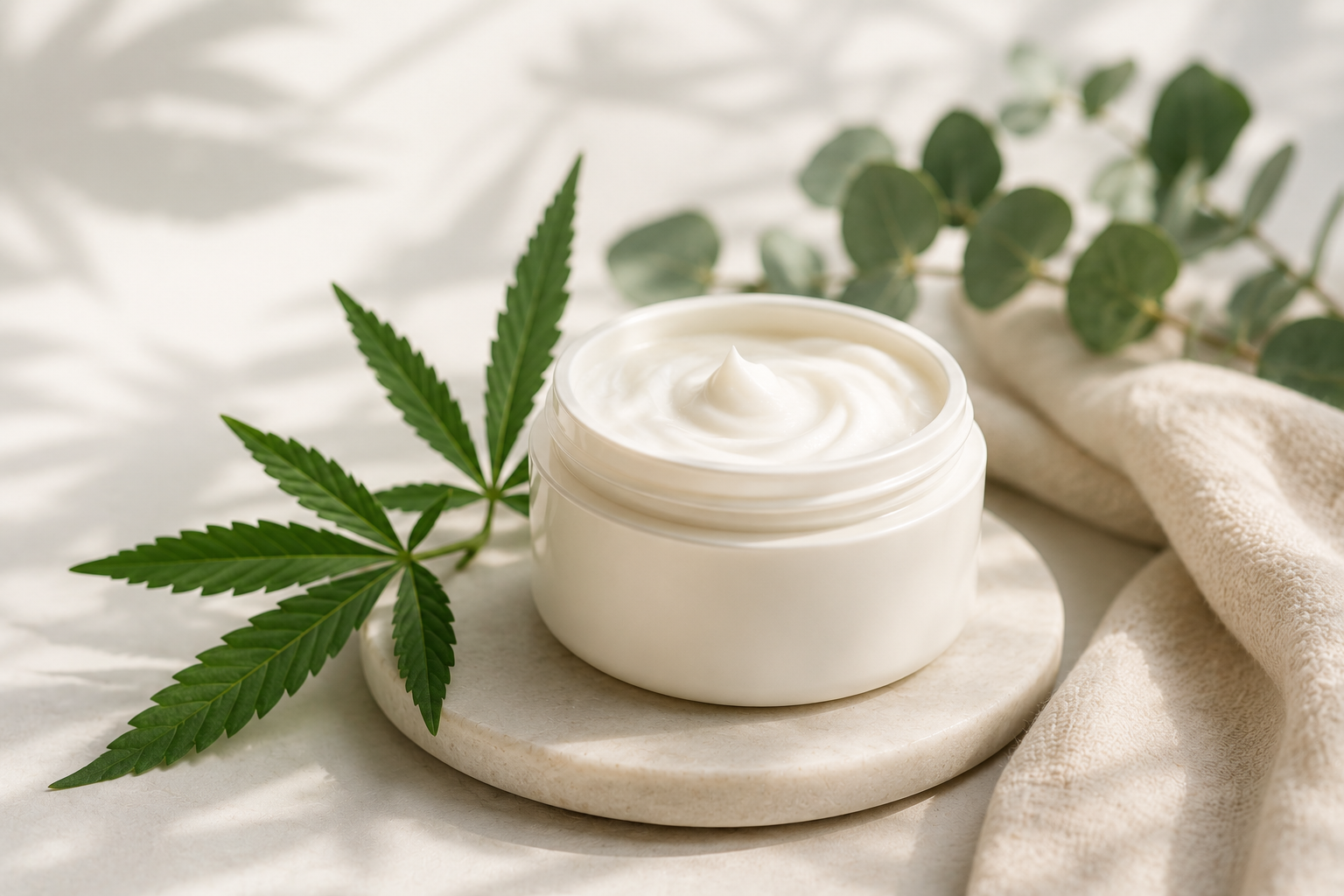
Is CBD Skin Cream Safe? What “Non-Comedogenic” Really Means
Many people may have noticed that the Comfort Cream label features the term “non-comedogenic”. This isn’t just an advertising gimmick but a significant formulation label whether or not the CBD skin cream is safe for regular use near the skin of the face, neck and other parts of the body where skin comes in contact with clothes.
In this publication, we take a closer look at this term as well as providing some information on how to determine whether a CBD cream is safe to use on skin and what points to consider before using any topical product in your daily routine.
Quick Answer: Is CBD Cream Safe?
Generally, topical CBD creams are deemed safe by many for application on the skin. The side effects that have been reported thus far are minor and usually consist of skin reaction symptoms such as irritation, redness, and rashes in particularly sensitive individuals. As with every new skin-care or topical product, it is advisable to perform a patch test beforehand and to review the list of ingredient substances that will be discussed in the sections below.
What Does “Non-Comedogenic” Mean?
To put it simply, non-comedogenic means that the formulation of a product does not block the pores. Comedones refers to the blocked pores, which are responsible for causing blackheads and other eruptions. Thus, it can be concluded that the non-comedogenic nature of a product means that it does not allow for the occurrence of such situations. The importance of this concept for CBD skin cream lies in the fact that a lot of body lotions tend to use heavy oil formulations, which may simply stay on the top of the skin and not get into it. The long-term use of such products may lead to clogged pores, in particular, at the places where skin is sensitive. The fact that Comfort Cream is called non-comedogenic means that this lotion is characterized by the lighter and faster absorbable nature of its ingredients, such as jojoba oil, which is similar to the oil produced by the skin surface.
Why This Matters More Than People Realize
Many individuals think that the terms “natural” or “infused with CBD” is always synonymous with being gentle for the skin but this is not correct since CBD products that exist on the market are very often lavishly marketed only for their scent or advertising effect without thinking about their rate of interaction with the skin when applied repeatedly and on a daily basis.
When the cream is used just once and then washed off there is no issue with clogged pores, however when the cream is used regularly, for instance daily on parts of the body after exercise or nightly for joints, the formulation becomes increasingly more important.
Is CBD Cream Safe for Sensitive Skin?
Ordinary people can generally tolerate CBD topicals quite well, but extra caution is needed if you have sensitive skin. The following should be monitored:
1. Redness or hotness after applying the product – a feeling of coolness or heat due to the menthol or other cooling ingredients is normal, but the alternative may indicate a problem.
2. Itching – it may indicate that you are allergic to one of the ingredients.
3. Dryness of skin upon regular use – does it mean the formulation is unsuitable for your skin type?
If you notice these symptoms regularly, you may need to stop using the product to examine the ingredients and find out whether you have allergies to any of them.
How to Patch Test CBD Cream Before Regular Use
Patch testing is a simple habit that takes the guesswork out of trying a new topical product:
1. Apply a small amount of the cream to a discreet area, like the inside of your forearm.
2. Wait 24 hours, keeping the area uncovered and avoiding water or other products on that spot.
3. Check for any redness, itching, or irritation. If your skin looks and feels normal, it’s generally safe to move on to your intended use area.
4. Start with smaller, less frequent applications the first week, even after a clean patch test, especially if you have a history of sensitive skin.
What to Look for in a Safe, Well-Formulated CBD Cream
When comparing products, it’s necessary to pay special attention to some label details:
1. Non-comedogenic product labeling is essential if you are going to apply it on the breakout area.
2. Precise declaration of CBD contents instead of vague statement “CBD-infused product.”
3. Inclusion of above-mentioned components like jojoba oil and ceramides, which provide proper absorption and assist skin barrier.
4. Complete list of ingredients given on the label – it should be visible and clear, or there is something that makes one cautious about such a brand.
For more information about the above aspects, check out our comparison of Comfort Cream given in another section of this site.
Why Comfort Cream Was Formulated This Way
Comfort Cream is termed as non-comedogenic since it has a framework of fast absorption and skin-supportive ingredients like jojoba oil and safflower seed oil, as opposed to heavy occlusive oil that sits on the skin surface. It’s meant for genuine daily use, on the shoulders, back, and joints, without the need to worry about development and irritations that occur with badly made topical creams. If you’re searching for a CBD skin cream you can employ on a regular basis, then look no further than this kind of detailed formulation.
Frequently Asked Questions
Is CBD cream safe to use every day?
For most people, yes, topical CBD cream is generally well tolerated with daily use, especially when formulated with skin-supportive ingredients. Patch testing first and watching for any irritation is always a good practice with a new product.
What does non-comedogenic mean on a CBD cream label?
It means the product is formulated not to clog pores, typically by using lighter, fast-absorbing ingredients instead of heavy oils or waxes that sit on the skin’s surface.
Can CBD cream cause a skin reaction?
It’s possible, though uncommon. Reactions are usually linked to a specific ingredient sensitivity rather than the CBD itself, which is why patch testing before regular use is recommended.
Is CBD skin cream safe for sensitive or acne-prone skin?
Many people with sensitive or acne-prone skin do well with a non-comedogenic, well-formulated CBD cream, but it’s still worth patch testing first and checking the full ingredient list for anything you know your skin doesn’t tolerate well.