
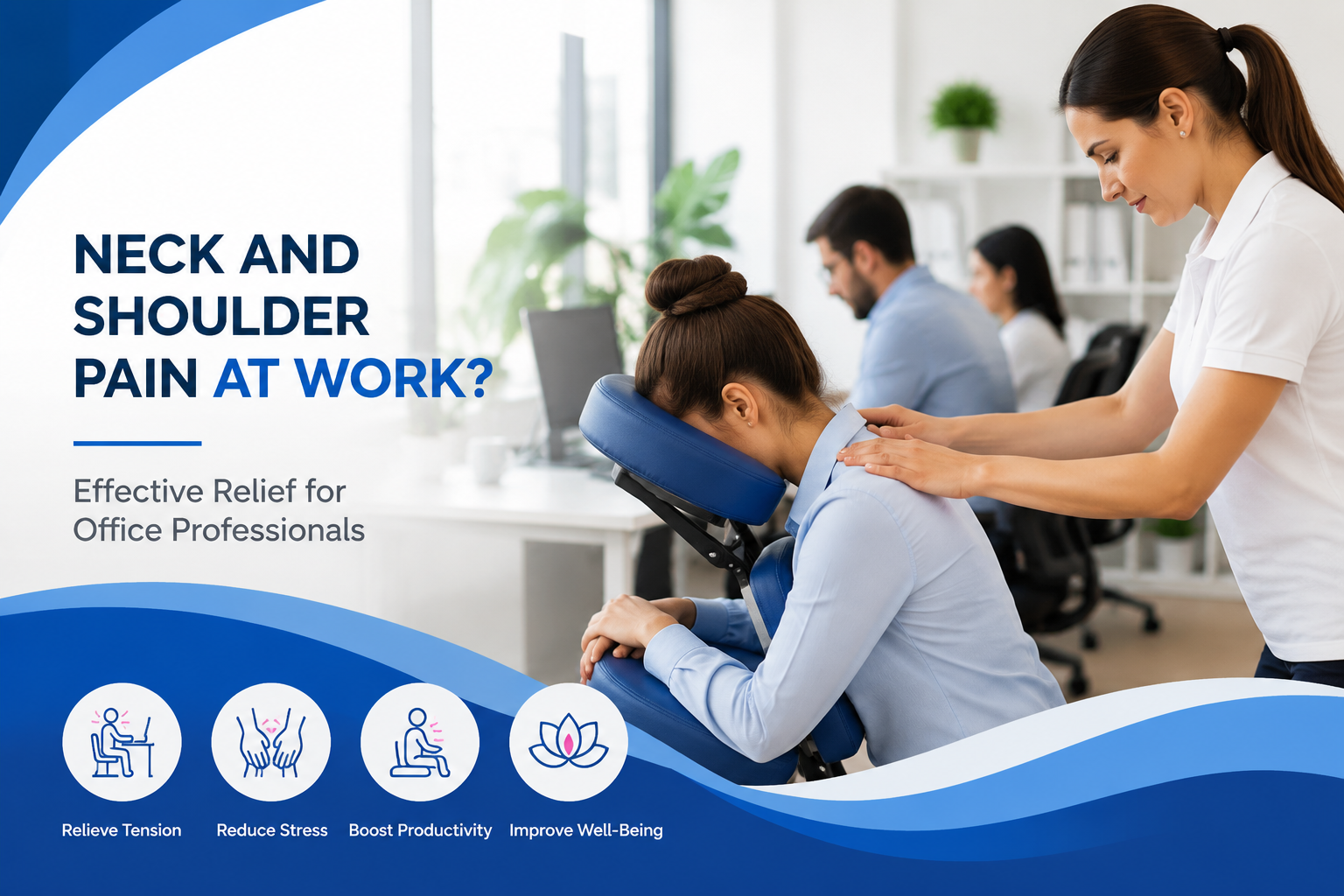
Why Office Workers Experience Neck and Shoulder Pain More Often (And How to Find Relief)
For people that spend the entire day working at a desk, there is a great chance that at some stage you have experienced neck and shoulder pain. It could be a mild stiffness after a long day of working, or it could lead to chronic pain, making it difficult to focus, sleep and enjoy day-to-day life.
For most workers in an office environment this pain becomes a way of life. The combination of long hours working in front of a computer, a poor posture, stress and repetitive movement create tension in your muscles and soreness.
The plus side of this situation is that you do not have to just live with this discomfort. Learning the reason behind your discomfort and how to help neck and shoulder pain will assist in improving your everyday comfort level and productivity rate.
The team at Mass Mobile Massage provides mobile massage therapy and workplace wellness services for professionals and companies across Boston to assist employees with feeling better using professional chair massage. The intention of this guide is to examine the reasons behind the increased pain experienced by office workers and what has actually been shown to help.
Why Are Office Workers More Likely to Experience Neck and Shoulder Pain?
Sitting for extended periods at work is typical of how you spend your time in most modern workplaces. Long periods of sitting at your desk, or anywhere else, can be significantly detrimental to your physical health even though it doesn’t seem physically demanding. Your muscles are under constant stress when sitting for long periods of time, which frequently leads to neck and shoulder aches.
Here are some of the more common causes of neck and shoulder pain in an office setting:
Poor Posture
When you slouch or lean forward at a computer monitor you are placing additional stress on your neck and upper shoulder muscles. Over time this type of improper posture can create tightness, rigidity and pain within your muscle tissue.
Also, it has been observed that many employees typically:
- Leaning toward the monitor
- Rounding forward at the shoulder joint
- Not using lumbar support when sitting in a chair
- Having their heads positioned in a downward fashion for extended periods of time
Although these behaviors may seem insignificant, they have a dramatic effect on any person’s muscle health.
Sitting for Long Hours
Human bodies were made to be mobile and active.
If an employee works at a desk all day long, the muscles may become fatigued and/or tight due to lack of movement. In addition, limited mobility can impact blood circulation which leads to sore and/or tight muscles.
This is especially true for:
- Employees working in offices
- Workers going remote
- Workers in customer service roles
- Employees in administrative positions
- Employees working as part of a corporate team
Stress and Muscle Tension
Stress can have an impact on both your mind and body. Stress is often held in the upper back/shoulder area and as a result can lead to tight shoulders, headaches and discomfort in the shoulders/upper back.
This is why workplace wellness programs and chair massage services have been growing in popularity in the Boston metropolitan area.
Signs Your Neck and Shoulder Pain May Be Work-Related
Pain does not always come about suddenly.
Discomfort has a tendency to build up gradually rather than instantaneously.
If you’re suffering from muscle tension related to work, you might have experienced:
- Stiffness following extended sessions at the computer
- Shoulder tightness at the end of the day
- Recurrent tension headaches
- Pain or restriction of movement while turning your head
- Restrictions in the muscles between your shoulder blades
- Fatigue in your upper back
Not being aware of discomfort will typically make it worse over time, and that’s why it’s important that we start preventing things before they happen.
How to Help Neck and Shoulder Pain Naturally
If you are wondering how to help neck and shoulder pain, the best approach often combines prevention, movement, and wellness support.
Here are several effective ways office workers can reduce discomfort naturally.
Improve Workplace Ergonomics
Small adjustments to your workstation can make a big difference.
Try the following:
- Keep screens at eye level
- Sit with shoulders relaxed
- Use supportive seating
- Avoid leaning forward
- Keep feet flat on the floor
Even simple posture improvements may reduce strain throughout the day.
Take Movement Breaks
Sitting for hours without movement often worsens stiffness.
Try standing up every 30–60 minutes to:
- Stretch shoulders
- Roll your neck gently
- Walk briefly
- Relax tense muscles
Movement helps improve circulation and reduces muscle fatigue.
Stretch Regularly
Gentle stretching can reduce tightness in the neck and shoulders.
Common stretches include:
- Neck rolls
- Shoulder shrugs
- Chest-opening stretches
- Upper back mobility exercises
Even five minutes daily may help improve comfort.
Massage Therapy for Shoulder Pain: Does It Help?
One of the most effective natural wellness solutions is massage therapy for shoulder pain.
Massage helps by reducing muscle tightness, improving circulation, and supporting overall relaxation.
For office workers, massage therapy can target common problem areas like:
- Neck stiffness
- Shoulder tension
- Upper back tightness
- Stress-related discomfort
Many professionals seek massage therapy for pain relief because it addresses the physical source of discomfort while also helping reduce workplace stress.
At Mass Mobile Massage, we provide convenient chair massage services for offices and businesses throughout Boston.
Our workplace massage programs help employees:
- Reduce stress
- Feel more comfortable at work
- Improve focus and productivity
- Support physical wellness
For employees who spend long hours at desks, chair massage can provide meaningful relief without interrupting the workday.
Why Chair Massage Works Well for Office Employees
Unlike traditional massage appointments, chair massage is designed for convenience.
Employees remain fully clothed while trained therapists focus on key tension areas such as:
- Neck
- Shoulders
- Upper back
- Arms
Sessions are typically short and easy to fit into a workday.
Many Boston companies now include workplace massage as part of employee wellness programs because healthier employees tend to feel more focused, energized, and productive.
When employees feel physically better, workplace morale often improves too.
Massage Therapy for Pain Relief: More Than Relaxation
Some people think massage is only for relaxation, but it offers much more.
Professional massage therapy for pain relief can support wellness by:
Reducing Muscle Tension
Tight muscles are one of the biggest causes of discomfort.
Massage techniques help loosen muscles and release built-up tension.
Improving Circulation
Better blood flow helps support recovery and overall muscle health.
Supporting Stress Reduction
Stress often contributes to physical pain.
Massage encourages relaxation, helping both the body and mind feel more balanced.
Encouraging Better Posture Awareness
Many office workers become more aware of posture habits after massage sessions, helping prevent future discomfort.
How Boston Businesses Are Supporting Employee Wellness
Employee wellness is becoming a bigger priority for many Boston companies.
Businesses are increasingly investing in services that support workplace comfort and reduce stress.
Chair massage programs have become popular because they are:
- Convenient
- Employee-friendly
- Time-efficient
- Wellness-focused
At Mass Mobile Massage, we help Boston businesses create healthier work environments through on-site chair massage services designed to support employee wellbeing.
Whether for corporate events, employee appreciation days, or ongoing wellness programs, workplace massage can make a noticeable difference.
Final Thoughts
Experiencing neck and shoulder pain from office work is more common than many people realize.
Long desk hours, poor posture, limited movement, and everyday stress can all contribute to muscle discomfort.
Fortunately, there are practical ways to improve comfort and wellbeing.
Simple changes like posture improvements, stretching, and regular movement can help but for many people, massage therapy for shoulder pain provides additional relief.
If you are looking for pain relief for neck and shoulder discomfort, professional massage therapy may help reduce tension, improve relaxation, and support better overall wellness.
At Mass Mobile Massage, we proudly provide workplace massage services throughout Boston to help employees feel healthier, less stressed, and more comfortable during the workday.
Because when employees feel better, they work better too.
FAQs
What causes neck and shoulder pain in office workers?
Common causes include poor posture, long hours sitting, repetitive movement, stress, and workstation setup issues.
How to help neck and shoulder pain naturally?
Stretching, movement breaks, posture correction, ergonomic improvements, and massage therapy can help reduce discomfort.
Does massage therapy help shoulder pain?
Yes. Massage therapy for shoulder pain may help reduce tension, improve circulation, and support muscle recovery.
Is massage therapy good for office workers?
Absolutely. Massage therapy for pain relief can help office employees reduce stress, muscle stiffness, and workplace discomfort.
Can chair massage help employees at work?
Yes. Chair massage can help reduce muscle tension, improve comfort, and support workplace wellness programs.